
Beyond Tools: How Computational Thinking Unlocks AI's True Potential

Learning Lab’s introductory comment:
Much ado has been made about AI's impact on critical thinking, and whether students will still be able to think critically in the age of generative AI adoption. Far less attention has been paid to whether higher education institutions and faculty have the computational thinking skills and technological literacy necessary to navigate the coming technological transformations.
Diego Bonilla, M.S., Ph.D., a Professor of Communications Studies at California State University, Sacramento, makes the case for why faculty should embrace computational literacy and thinking skills regardless of their disciplinary background, and how building this foundation can open up new frontiers for scholarship.
As institutions engage with AI's profound impact on academic practices, it's crucial to examine higher education's historical approach to technological innovation. Institutions have moved rapidly through waves of adoption - from Blackboard to Canvas, from MOOCs promising educational democratization, from iPad distribution initiatives to clicker-enhanced classrooms, from Second Life virtual campuses to metaverse experiments. Each new platform prompted substantial institutional investment in infrastructure, training, and implementation—resources that were often underutilized when the focus shifted to the next emerging system. Meanwhile, the fundamental importance of developing true computer literacy and computational thinking among administrators, faculty, and students remained secondary in institutional priorities and professional development planning.
This pattern of prioritizing platform adoption over computational foundations becomes especially worrisome as institutions incorporate AI technologies. Despite the dramatic technological transformation of academic work over the past decades, most faculty receive minimal instruction in computer literacy or computational thinking. Instead, professional development typically focuses on learning specific platforms or tools—the same approach that led to the cycle of adoptions and abandonments described earlier.
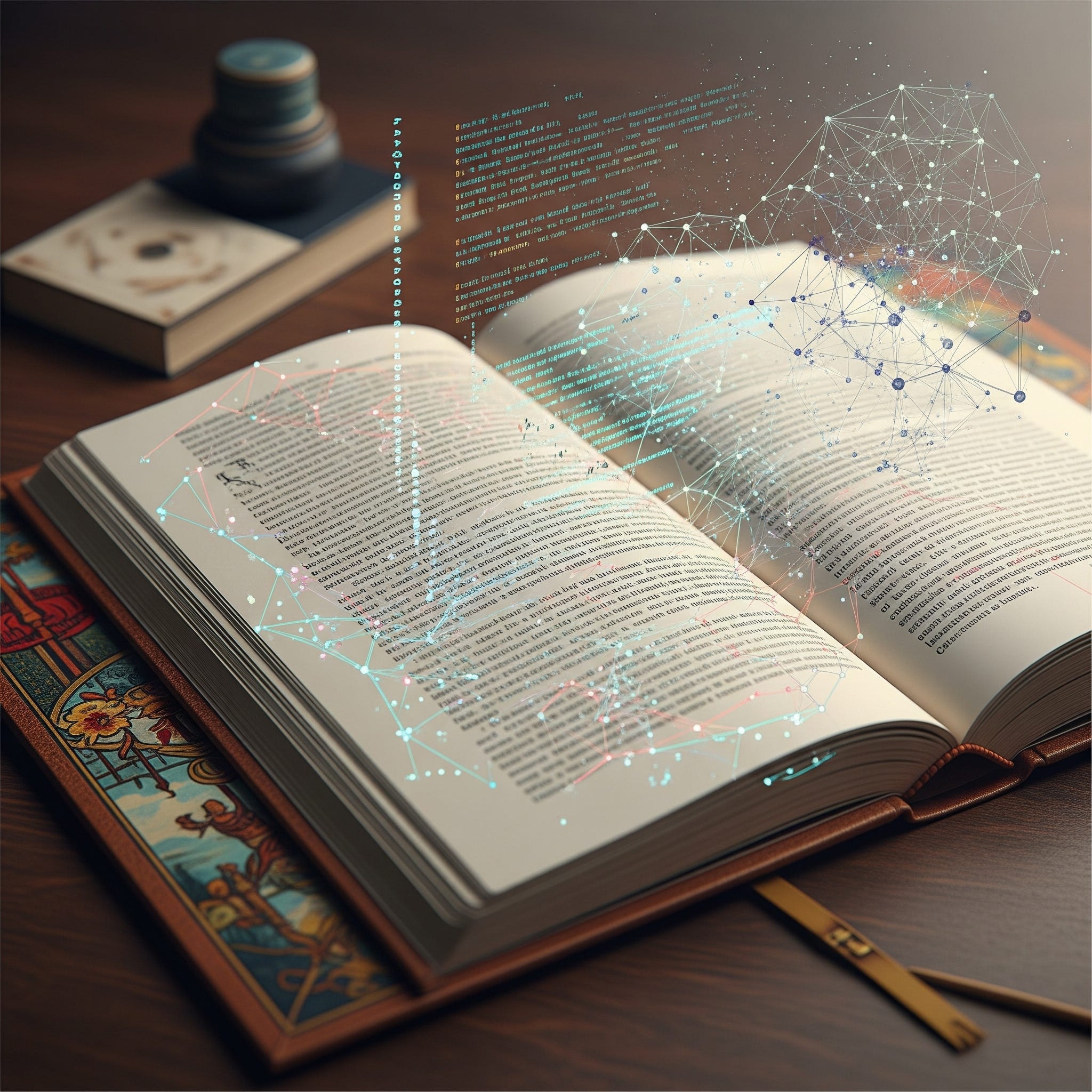
It doesn't have to be that way. Let me offer an illustrative example of computational thinking applied to literary texts. In 2003, I developed 'Tablada Hipertextual,' a computational project that enables readers to navigate poet José Juan Tablada's complete works by following word connections rather than reading linearly. This work was later published electronically in 2020 by UNAM's Instituto de Investigaciones Filológicas, where I wrote a prologue titled 'Sobre la importancia del pensamiento computacional y la literatura' (On the importance of computational thinking and literature). The project demonstrates how understanding the computer as a programmable tool, rather than just a display device, can fundamentally reshape how we read and analyze literature. Two decades have passed since this early application of computational thinking to humanities, yet most disciplines still haven't integrated these valuable approaches.
Computer literacy and computational thinking (both which get short shrift) represent far more than basic technological proficiency. As our environment becomes increasingly mediated by interconnected technologies—from networked sensors to neural networks, from robotics to artificial intelligence—computer literacy provides a crucial understanding of how these systems interact, communicate, and shape our world. Meanwhile, computational thinking transforms how we approach this technological ecosystem, enabling us to recognize patterns, envision possibilities, and formulate solutions across different systems.
The Tablada project illustrates this synergy: computer literacy provided understanding of how digital systems could process literary texts, while computational thinking enabled imagining new ways to reveal patterns and connections within those texts. This combination of literacy and thinking skills proves increasingly valuable as we face more complex technological integration in academic work. Rather than merely adopting each new platform or tool, faculty with these foundations can evaluate, adapt, and creatively implement technological solutions that truly serve their scholarly and pedagogical needs.
Lack of this foundational understanding, however, has become a noticeable deficit especially with AI, where distinguishing actual capabilities from marketing promises requires both technological literacy and systematic thinking. Faculty who understand how digital systems process information, recognize patterns across different technologies, and think computationally about problem-solving are better positioned to evaluate and implement AI thoughtfully. Without these foundations, institutions risk repeating familiar patterns: rapid adoption of AI tools without the deeper understanding needed to assess their true educational value and potential risks. Moreover, unlike previous educational technologies, AI's far-reaching implications make computer literacy and computational thinking essential not just for pedagogical decisions, but relevant to higher ed's broader role in guiding students through this technological transformation.
Today's higher education institutions must understand that the challenge isn't simply about incorporating AI into existing courses or learning new tools—it's about communicating the importance of deeper technological understanding to colleagues who may not see the imperative this has become. While faculty across disciplines have developed sophisticated approaches to critical thinking and writing, many haven't had opportunities to develop similar depth in computer literacy and computational thinking. The implications vary across the disciplines: humanities faculty might need to understand how AI processes and generates text, social scientists may need to grasp how algorithms analyze behavioral patterns, and scientists might require insight into how AI models process data. Yet these diverse applications share a common foundation in computational thinking—the ability to recognize patterns, formulate problems systematically, and understand how digital systems process information.
As AI becomes increasingly central to academic work, this foundation in computer literacy and computational thinking becomes as crucial as traditional academic skills. The path forward requires finding ways to demonstrate how computational thinking enhances rather than distracts or stands apart from disciplinary expertise—a challenge that reminds me of my efforts, two decades ago, to explain how computational approaches could reveal new ways of reading Tablada's poetry. The first step toward integrating computational thinking is acknowledging its necessity. Faculty need opportunities to develop computational literacy and thinking skills regardless of their disciplinary background---representing not just another technological trend to master, but a fundamental shift in how we approach digital tools in education.
To read other posts: https://calearninglab.substack.com/profile/posts
Bonilla, D., & Mata, R. (Eds.). (2020). Tablada hipertextual: Poesía reunida de José Juan Tablada (Edición electrónica). Universidad Nacional Autónoma de México. ISBN 978-607-30-3239-1. https://www.iifl.unam.mx/tablada/interiores/descargas.php?pos=11
Beecher, K. (2017). Computational Thinking: A Beginner's Guide to Problem-Solving and Programming. BCS Learning & Development Limited. ISBN 978-1780173641.
Denning, P. J., & Tedre, M. (2023). Computational Thinking (Essential Knowledge series). MIT Press. ISBN 978-0262547321.